Blog · 23 October 2026
Time Is Money: Stop Wasting Manager Time on 5S
Lean manufacturing is built on one idea: time is money, so take out everything that doesn’t add value. Most plants apply it hard on the line. Waiting, extra handling and needless walking get measured and cut.
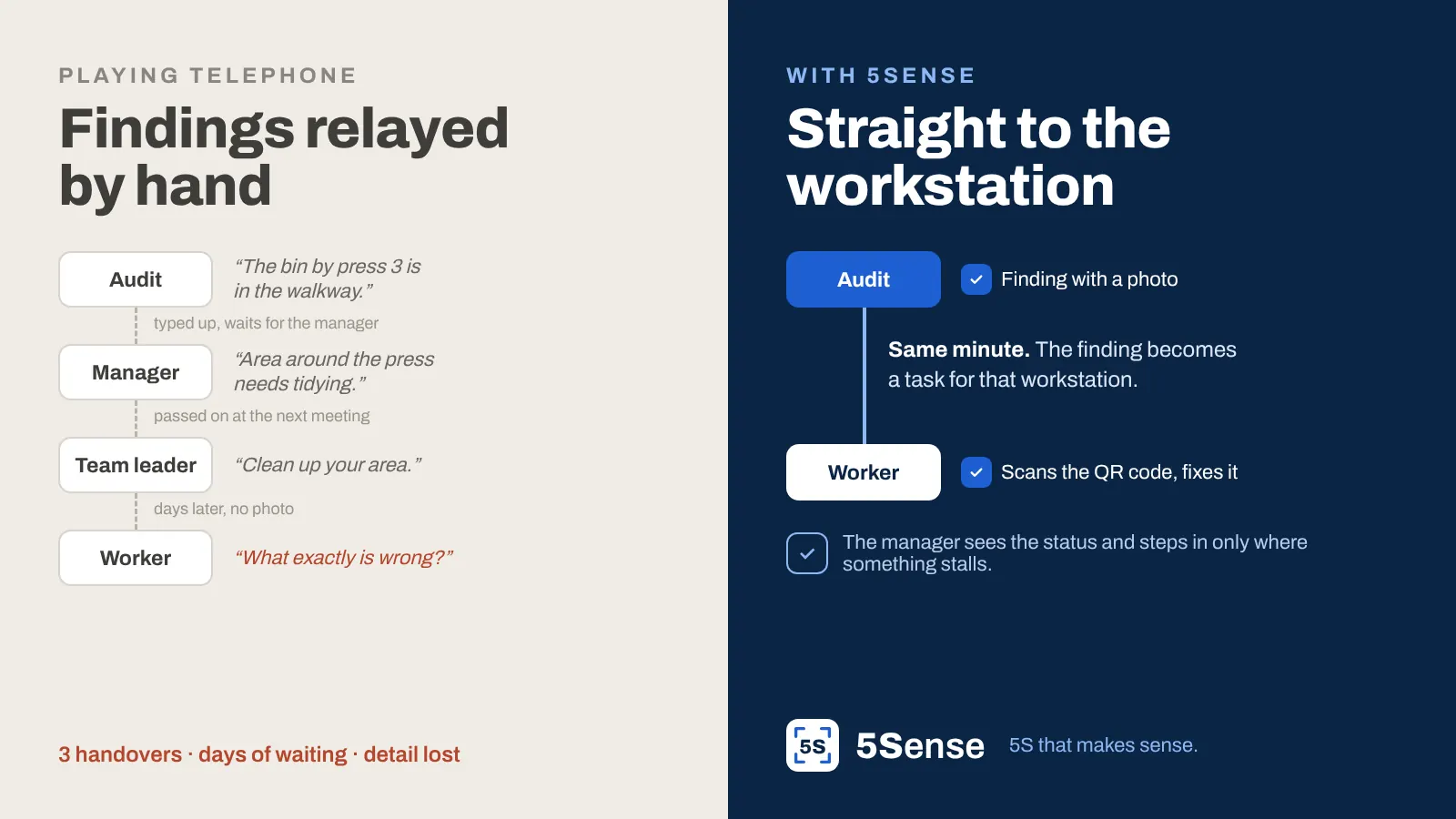
Then look at how the same plant runs its 5S program. Audits on a clipboard, typed up later. Findings passed from the auditor to the manager, from the manager to the team leader, from the team leader to the person at the workstation. Every step waits for someone who has more urgent work.
5S is supposed to remove waste. Run that way, it creates a lot of its own.
The waste hiding in your 5S program
Use the same lens you use on the line. A typical paper-based 5S program has most of the classic wastes, just in management time instead of parts:
- Waiting: a finding sits in an audit sheet until the manager has time to read it.
- Transportation: the information is carried by hand, one person at a time, from the office to the floor.
- Overprocessing: the audit is written on paper, then typed into a spreadsheet, then summarized for a meeting.
- Motion: someone walks around looking for the right person, with a printout or a photo on their phone.
- Defects: by the time the message arrives, it is incomplete or wrong, so the fix is too.
None of this makes the workstation more orderly. It only moves information around.
Playing telephone with audit findings
The founder of 5Sense ran a production department. From that experience, the hardest part of 5S was not the audit. It was being the middleman between the audit results and the people who had to fix things.
Every finding had to go through the manager. The manager passes it to the team leader, the team leader explains it to the worker, often days later and without the photo. It is the children’s game of telephone: each handover loses some detail and adds some delay. “The bin by the press is in the walkway” turns into “clean up your area”. The worker doesn’t know what exactly is wrong, the manager doesn’t know whether it got fixed, and the next audit finds the same thing.
The lesson was simple: the information has to go straight from the audit to the person who works at that workstation. A manager should stay responsible and check progress, but not carry every message by hand.
Send the finding straight to the target
That is the core of how 5Sense works:
- Audit on a phone. The auditor goes through the workstation item by item and takes a photo of anything that is off. Nothing to type up afterwards.
- Every finding becomes a task for that workstation. It lands where the work happens, with the photo and the item from the checklist.
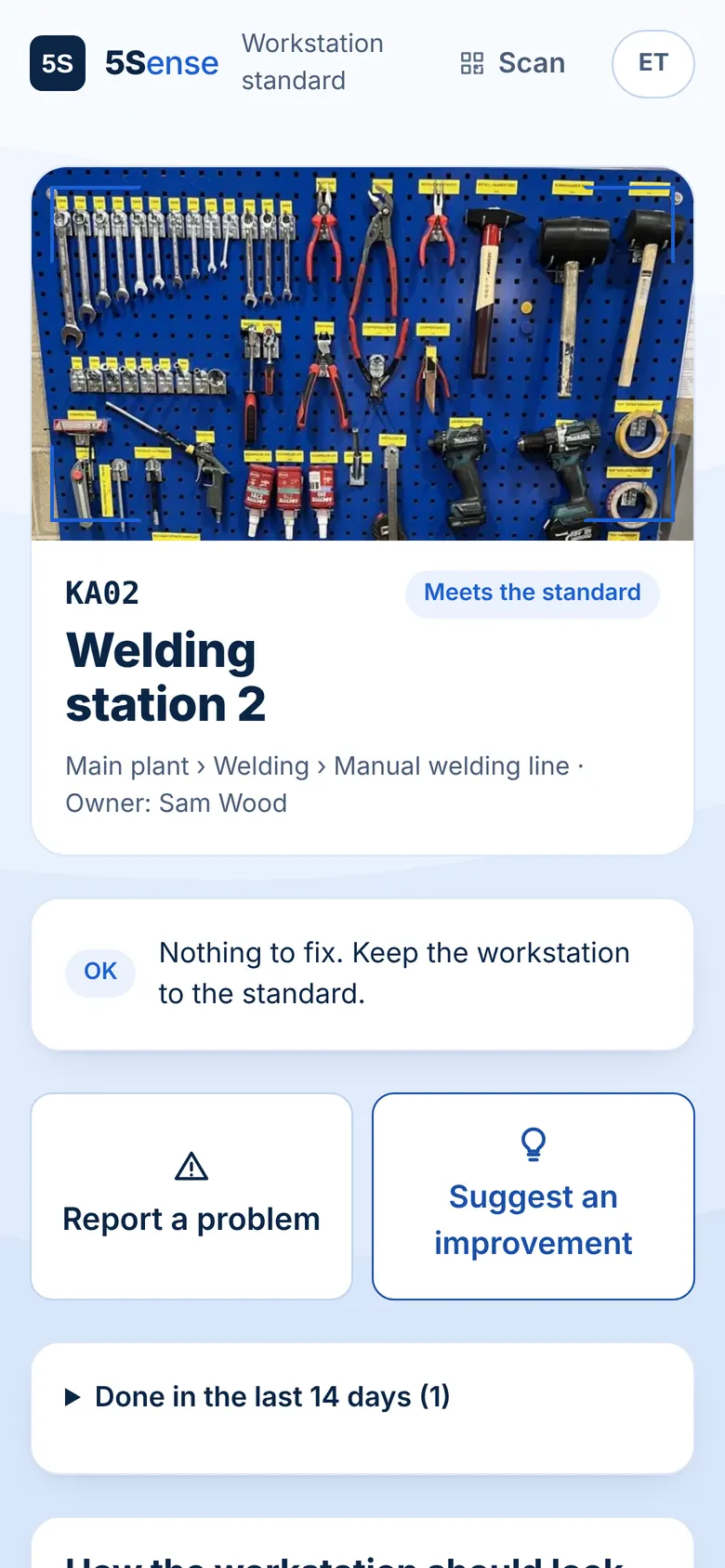
- The worker sees it directly. They scan the QR code at the workstation and see the standard and the open fixes on their phone, with no account and no password. When it’s fixed, they mark it done with a photo.
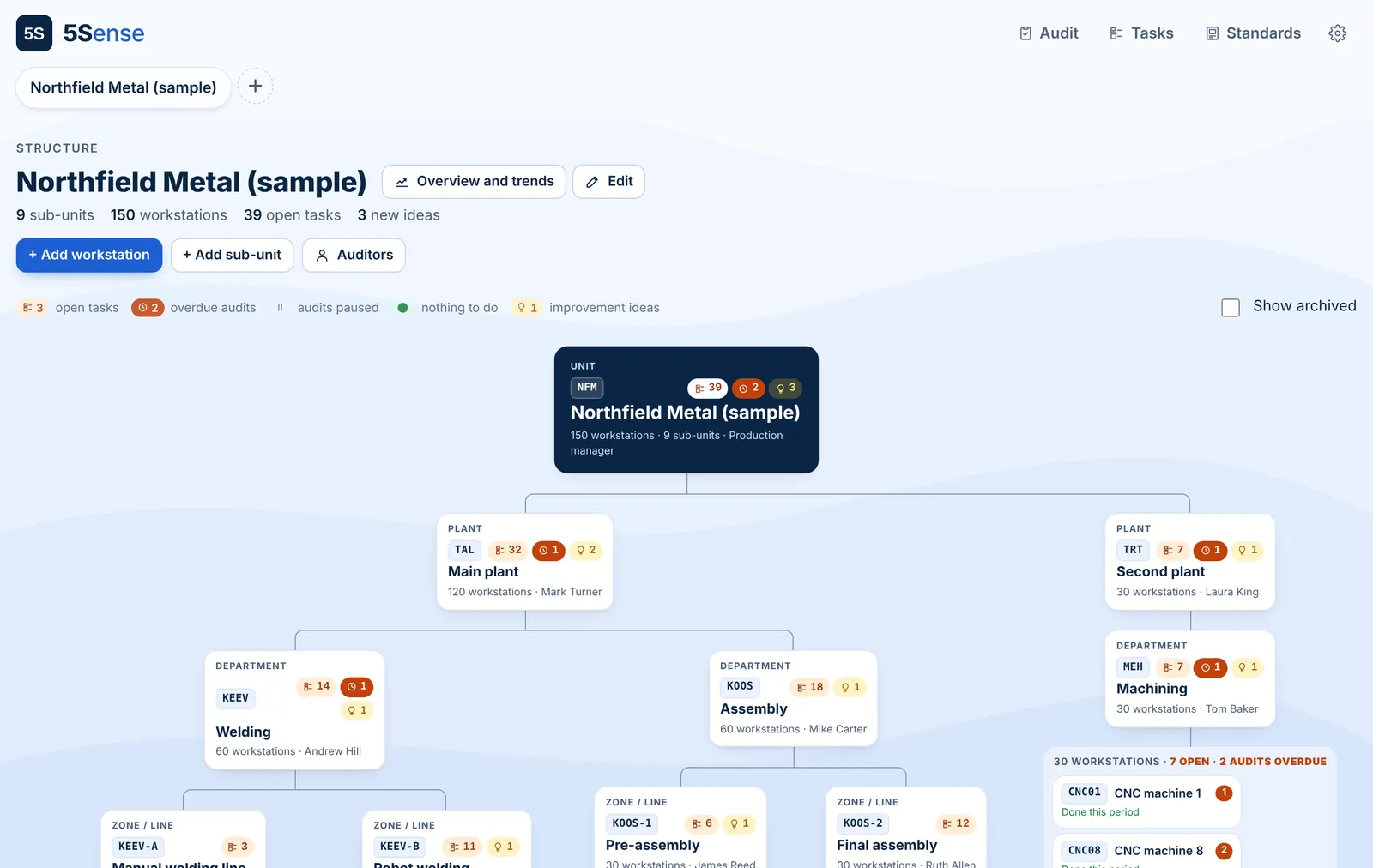
- The manager sees the status, not the details. One view of what is open, what is late and which problems keep coming back. The manager steps in only where something stalls.
No relaying, no printouts, no “I thought someone told you”. The manager’s 5S time goes into checking and coaching, not delivering messages.
Don’t waste time getting started, either
The other place 5S software eats time is the setup. If it takes a project, a consultant and a training day before the first audit, the program is losing time before it starts.
We built 5Sense so one person can do it in an afternoon:
- Map the company in a structure tree: plants, departments, lines and workstations. Add, move or rename them as you go.
- Create the standards. A standard is one photo of the workstation in order and a few short lines. It takes about a minute, and changing it later takes about a minute too.
- Pick a checklist. Start from the ready-made 5S audit templates, or write your own.
- Print the QR labels and put them on the workstations.
- Start auditing the same day.
Try this on your own 5S
Before changing anything, measure the waste the way you would on the line. Take the last five audit findings and write down for each one:
- How many people handled it before the fix reached the person at the workstation?
- How many days passed between the audit and the fix?
- Did the person who fixed it see the photo or the original finding?
If the answers are “three people”, “a week” and “no”, the problem isn’t discipline on the shop floor. It’s the path the information takes. Shorten that path and 5S gets cheaper to run, which is the only way it survives a busy month. More on why that matters in why 5S keeps falling apart.
5Sense: 5S that makes sense. Try the demo with a sample plant, no sign-up.
Written by the 5Sense team, people who have run production on the shop floor. About us