Blog · 21 October 2026
Why 5S Keeps Falling Apart (and How to Sustain It)
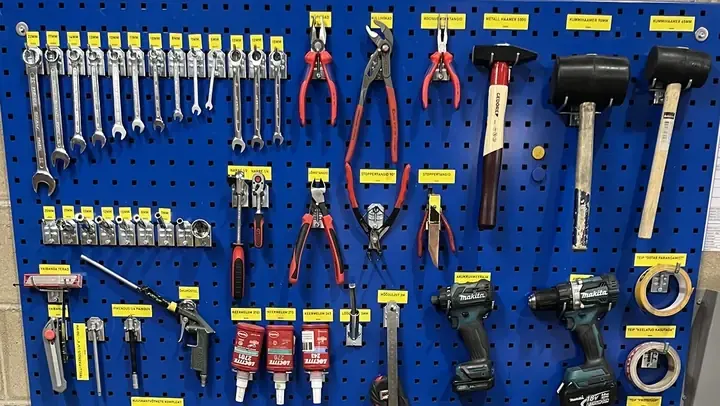
Almost every factory has the same 5S story. The launch goes well. Areas get sorted, tools get shadow boards, the first audits look great. A few weeks later, a busy month hits, and nobody can say exactly when 5S stopped.
Nobody decided to drop it. It just stopped. The usual explanation is discipline. In our experience the real reason is time.
Sustaining 5S is a time problem
Look at what one audit finding costs in a typical plant:
- Someone audits the area and notes what’s wrong.
- The results get typed up, printed or put in a spreadsheet.
- A manager reads them and decides who should fix what.
- The manager tells the team leader. The team leader walks to the operator with a photo and explains what to fix.
- Later, someone has to check whether it was fixed.
The audit is the short part. Everything after it runs through managers who already have production targets, staffing and customer problems on their plate. One finding can pass through three people before anyone fixes it. When delivery problems hit, 5S is the first thing that waits.
It looks like a discipline problem. It isn’t.
When 5S slips, operators get the blame: tools left out, areas messy again. But look at what the operator actually sees. An audit happened somewhere. A manager might come by later. There’s no clear picture of what “right” looks like and no direct message saying “this is off, please fix it”. People can’t keep a standard they can’t see.
That’s why so many 5S programs turn into cleaning the day before an audit or a customer visit. It’s the only moment the standard is visible. Pushing harder doesn’t help either: more audits and more meetings add more of the same manager time, and the next busy month wins again.
What sustains 5S: take the manager out of the relay
The manager should stay responsible for 5S, but not be the messenger for every finding:
- The finding goes straight to the person who fixes it. No printing, no relaying through two levels.
- The standard is always visible at the workstation. The operator sees what “right” looks like without asking anyone.
- The manager sees the status, not the details. One view of what’s open, what’s late and what keeps coming back. Step in only where something stalls.
And one mindset change: an audit is there to find improvements, not culprits. When the same problem keeps returning, ask why the tool keeps ending up there. Usually it’s a missing place, the wrong location or too few tools, not a lazy person.
How 5Sense keeps the time cost minimal
We built 5Sense around exactly this:
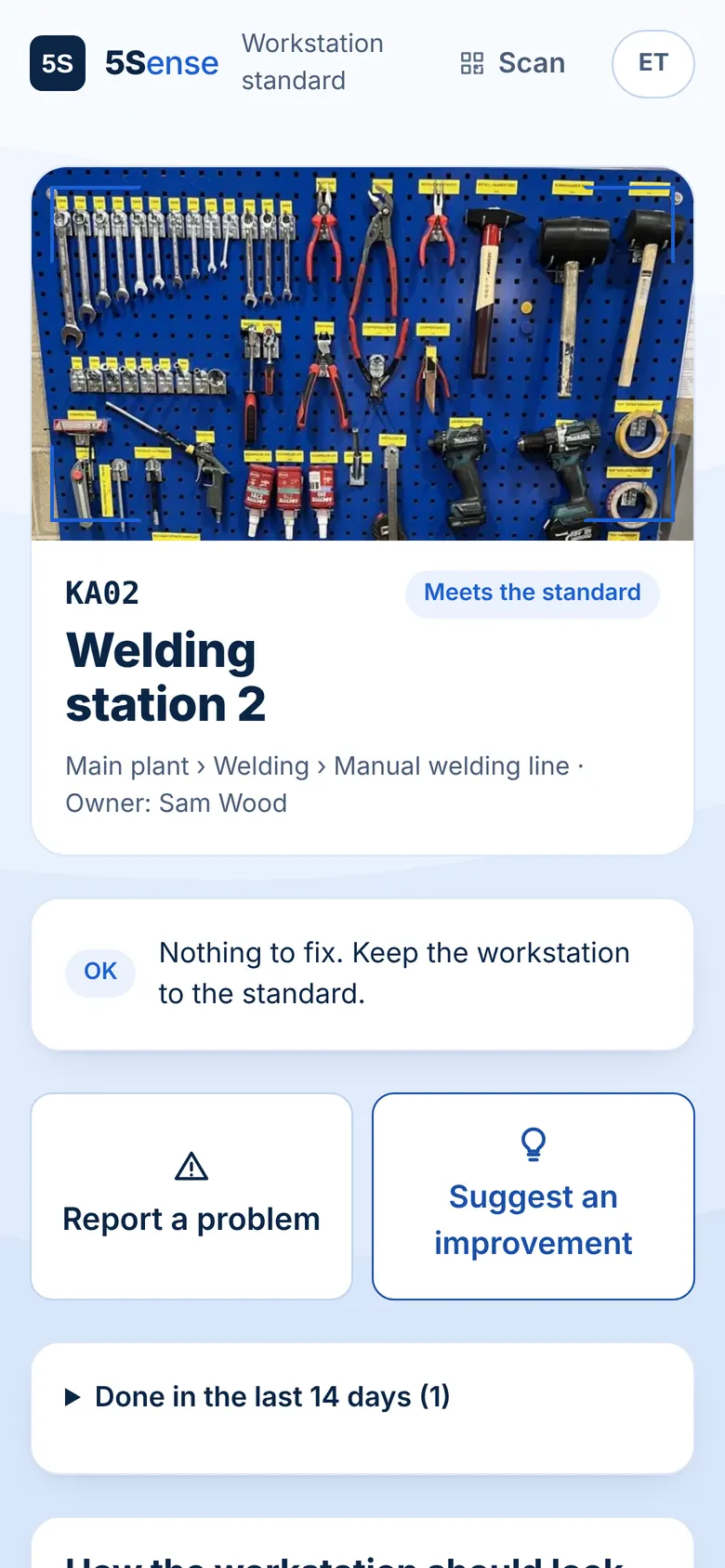
- An audit is done on a phone, workstation by workstation, with a photo of anything that’s off.
- Every finding becomes an improvement task for that workstation. The operator sees it by scanning the QR code at the station, without an account or password.
- The manager sees all open tasks in their area, what’s overdue and which problems repeat, without chasing anyone.
- Repeat issues are flagged, so you fix the cause once instead of the symptom every week.
The test
If your 5S only works when a manager personally pushes it, it isn’t a system yet. The goal is to keep management’s 5S time small enough that it survives the busiest month of the year.
5Sense: 5S that makes sense. Try the demo
Written by the 5Sense team, people who have run production on the shop floor. About us